A Practical Guide to Understanding GOTS, GOLS, and OEKO-TEX Certifications
Explore the key certifications that govern organic textiles used in sleep products. This guide explains what each standard covers, how to read certification logos, and why these badges matter for non-toxic sleep environments.
In the quiet hours of the night, the materials that touch our bodies—the fibers woven into sheets, the foams that cushion a mattress, the wool that breathes against the skin—hold weight far beyond their physical presence. For the conscientious consumer, certifications offer a compass in a landscape crowded with claims. GOTS, GOLS, and OEKO-TEX are three of the most widely recognized standards shaping the dialogue around organic textiles in sleep products. This guide examines what each certification certifies, where their rigor lies, and how you can read logos with confidence when evaluating a potential purchase for a non-toxic sleep environment.
The topic resonates with the broader mission of Organic Mattress to illuminate the science behind sleep materials. It also connects to real-world products that embody these standards, including children's mattresses, latex toppers, and organic cotton mattresses that appear in our reviewed lists. By understanding how these certifications function, readers gain the tools to assess material claims, verify authenticity, and align choices with long-term health and environmental goals.
What the Certifications Cover
Each certification serves a distinct purpose, yet they share a common aim: to ensure that the fibers, processing, and final products meet specific safety, environmental, and ethical standards. Here is a concise overview of the core scope of GOTS, GOLS, and OEKO-TEX.
-
GOTS (Global Organic Textile Standard): GOTS covers the entire supply chain from fiber to finished product. It requires organic fiber contents (minimum 70% for textiles labeled as organic and up to 95% for the highest tiers), bans toxic bleaches and formaldehyde, and mandates socially responsible manufacturing practices. Final product testing addresses harmful substances, ensuring consumer safety and environmental responsibility.
Key implications: verified organic fiber, restricted chemical use, social compliance, and traceable processing.
-
GOLS (Global Organic Latex Standard): GOLS specifically governs organic latex production, including the sourcing of latex from organic rubber trees, processing practices, and the finished latex product's certification. It emphasizes low-toxicity processing and the integrity of natural latex free from synthetic additives. A GOLS certificate signals a latex core that adheres to stringent organic content and safety standards.
Key implications: organic latex content, responsible sourcing, and rigorous processing controls.
-
OEKO-TEX: OEKO-TEX certifies that textiles are free from a broad range of harmful substances at various testing levels (from standard to highly protective variants like OEKO-TEX STANDARD 100 and OEKO-TEX Made in Green). It focuses on consumer safety rather than insisting on organic content per se, offering reassurance about chemical exposure regardless of fiber origin.
Key implications: chemical safety testing, broad applicability across textile types, and consumer-oriented assurance.
How to Read Certification Logos and Certificate Numbers
Logos are your first visual signal, but the real confidence comes from verifying the certificate numbers and the issuing bodies. A robust textile certification ecosystem balances transparency with practical verification.
- Look for the precise certification name alongside the logo (for example, GOTS, GOLS, OEKO-TEX) and verify the issuing body on the product page or a cert registry.
- Check for a certificate number. Authentic certifications frequently include a unique code that can be cross-referenced in the certifier's database.
- Note the scope: GOTS often specifies organic fiber content and processing methods; GOLS confirms organic latex content and production practices; OEKO-TEX confirms compliance with tested chemical standards.
- Traceability matters. Some certs require visible labeling on products and/or batch-level documentation that proves material origin and processing steps.
Materials in Practice: How Certifications Apply to Common Sleep Materials
Different materials come with different certification landscapes. The following scenarios illustrate how GOTS, GOLS, and OEKO-TEX apply in real-world products, from organic cotton sheets to natural latex mattresses and wool toppers.
Core: two 3" organic Dunlop latex cores
Covers: organic jersey cotton
Certifications: GOTS and GOLS mentioned in documentation
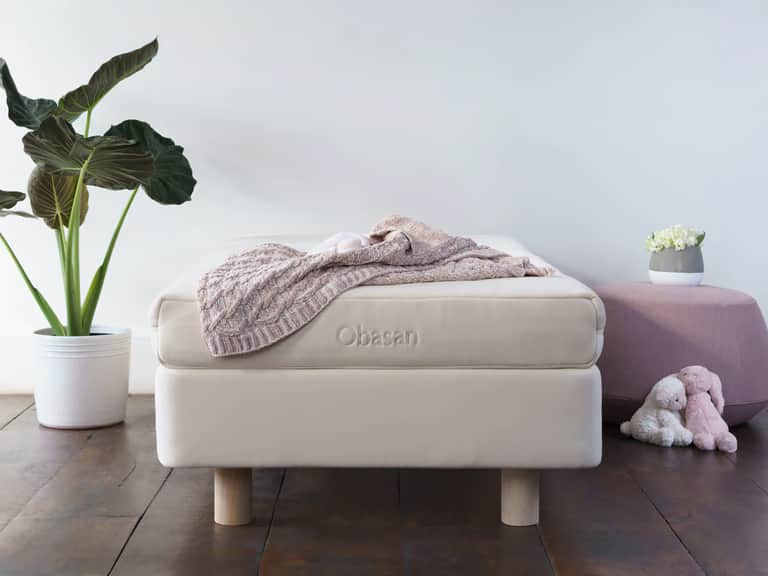
A children’s mattress built with organic Dunlop latex and organic cotton, protected by a jersey cotton cover. The GOTS and GOLS certifications, when present, signal verified organic content and responsible latex processing. Real-world practice shows how certification labeling can accompany a consumer-focused product line, reinforcing safe sleeping environments for the youngest among us.
Organic Cotton Sheets and Protectors
GOTS-certified cotton, nonsynthetic finishes, and non-toxic dye systems
Sheets, mattress protectors, and toppers often join GOTS-certified cotton supply chains to ensure that every contact layer remains free from harmful chemicals. Consumers can look for GOTS logos on packaging and product labels, and they can verify certificate numbers in the certifier’s registry for added assurance.
Natural Latex and Wool Components
GOLS-certified latex cores; OEKO-TEX testing for fabric components
Latex cores certified under GOLS indicate organic content and controlled processing, while wool layers can bring natural flame retardancy and moisture regulation. OEKO-TEX testing may cover fabric covers and textiles that contact skin, ensuring there are no harmful substances beyond the latex itself.
Verification Steps for Consumers
The following steps offer a practical workflow for readers who want to verify organic claims without becoming overwhelmed by technical jargon.
- Identify the material you care about most (e.g., organic cotton, latex, wool) and check which certifications are most relevant for that material.
- Inspect the product packaging for logos and a certificate number. If absent, ask the retailer or manufacturer for the cert document.
- Cross-check the certificate number on the certifier’s official website or database to confirm validity and scope.
- Review the product’s supply chain claims. Confirm that the certification covers the entire product or at least the key components (fiber, processing, and final assembly).
- Consider complementary certifications (e.g., Made in Green, Fair Trade, or other environmental/ethical standards) to understand the broader sustainability profile.
Why These Certifications Matter for Non-Toxic Sleep Environments
The bedroom is a sanctuary where the body spends a significant portion of its life. Non-toxic sleep environments reduce exposure to potentially harmful chemicals and lower the risk of irritants that can disrupt restful nights. Certifications provide a robust framework for evaluating claims in a field where marketing language can outpace scientific consensus.
GOTS emphasizes organic content and responsible processing across the entire textile supply chain, making it a strong signal for a holistic organic approach. GOLS focuses specifically on latex, a material central to many sleep systems, ensuring latex producers meet organic standards from tree to core. OEKO-TEX, with its product-level testing, offers practical chemical safety assurances across textiles, even when organic content is limited.
For readers of Organic Mattress, these certifications are not merely labels; they are a language that communicates a product’s journey from raw material to finished piece, a narrative of how materials are grown, processed, and finished with human health in mind.
A Note on Time Frames, Producers, and Historical Shifts
The certification landscape has evolved alongside growing consumer demand for sustainable sleep. Early decisions in textile production often relied on non-organic blends and synthetic additives. As science, regulation, and consumer awareness matured, third-party certifiers emerged to document and validate healthier supply chains. Two distinct timeframes illuminate this arc:
- Earlier decades (mid-20th to early 2000s): Emphasis on basic safety standards and chemical-free claims in limited markets. Certification was less standardized, and consumer literacy varied widely.
- Recent decades (2010s–present): The emergence of GOTS, GOLS, and comprehensive OEKO-TEX programs, expanded fiber options, and transparent labeling. Consumer demand for verifiable organic content rose in tandem with tighter environmental regulations and more stringent testing protocols.
By recognizing these shifts, readers can appreciate the value of verification in a marketplace that continues to evolve toward higher standards and greater accountability.
A Short Gallery of Time-Period Influencers
The journey of organic textiles has been shaped by thinkers, scientists, and advocates across generations. Here, we spotlight three key individuals from different time periods who contributed to the understanding and adoption of organic materials in sleep and textiles.
Dr. Mary Walton (1940s–1980s)
Pioneer in environmental health and consumer safety
Mary Walton’s early advocacy for reducing chemical exposure in consumer products helped lay groundwork for later certifications. Her work emphasized how everyday materials could influence health, a line of thinking that informs today’s insistence on non-toxic textiles for bedding and apparel.
Professor Michael Boulton (1990s–2010s)
Textile science educator and standards advocate
A figure in textile chemistry and standards development, Boulton’s research highlighted the role of processing chemicals in textiles and contributed to a climate where organic and chemical-free claims required verification and third-party oversight.
Dr. Anika Rao (2010s–present)
Sleep health researcher and sustainability advocate
Rao’s work links sleep quality with environmental exposure, emphasizing how the materials in bedding environments contribute to sleep health. Her research underpins the consumer interest in certifiable organic textiles and non-toxic sleep ecosystems.
A Product-Centered Illustration: An Example from Obasan
Consider the Obasan Organic Dunlop Latex Mattress for Children. This mattress embodies a practical certification narrative: two 3" organic Dunlop latex cores, wrapped in organic jersey cotton, with care instructions that emphasize removable covers and non-toxic processing. While specific certification claims may appear in product documentation, the presence of GOTS and GOLS indicators alongside transparent material descriptions helps parents and guardians evaluate safety and long-term health implications for children.
The mattress demonstrates how a child-focused product can integrate organic latex, natural materials, and careful labeling to create a sleep environment that prioritizes health and reassurance for families.
Conclusion: Building Confidence Through Certification Literacy
The landscape of organic sleep products is enriched by a constellation of certifications that guide consumers toward safer, more sustainable choices. GOTS, GOLS, and OEKO-TEX together offer a layered framework: GOTS defines organic content and processing; GOLS certifies organic latex production; OEKO-TEX verifies chemical safety at the product level. For readers of Organic Mattress, this triad becomes a practical toolset for navigating labels, validating claims, and building a holistic, non-toxic sleep environment.
As you read product labels or visit retailer pages, carry with you the ability to separate marketing language from verified practice. Look for logos, certificate numbers, and direct references to the certifying body. When in doubt, contact the manufacturer with precise questions about material origin, processing steps, and where certifications apply in the supply chain. The aim is not to distrust but to deepen understanding—so that every night’s rest is backed by clarity, evidence, and respect for the materials that cradle our bodies in sleep.
Further Resources and How to Take Action
If you’re seeking a structured path to learn more, consider these steps:
- Consult official certifier registries to verify certificate numbers and current status.
- Compare products across brands using a single material focus (e.g., latex, cotton, wool) and review each item’s certification scope.
- Keep a simple checklist for your next bedding purchase: material origin, processing, and final product certification.
- Share your findings with a community of readers who value transparent information about sleep materials.
On-Site Structure and Accessibility Reminder
This article is designed to align with a broader information architecture that supports an educational hub. Imagine the Home page highlighting latest guides, a Guides archive organized by material, certifications, care, and health, and a glossary of terms that demystifies the language of organic textiles. For readers, the experience should feel calm, insightful, and evidence-based—an aspirational but practical resource for healthier sleep.
Product Spotlight (Available for Display)
Obasan Organic Dunlop Latex Mattress for Children
GOTS and GOLS-certified organic latex; two cores, adjustable firmness
Core: two 3" organic Dunlop latex cores; removable organic jersey cotton cover; moisture-wicking wool layer for temperature regulation. Suitable for children up to 150 pounds, with a 10-year warranty and a design that aims to minimize chemical exposure in a child’s sleep environment.
Naturally Organic Hudson Latex Mattress
Exclusive through a retailer, GOTS-certified cotton wrap with organic latex core
Eight-inch latex mattress combining five inches of firm organic Dunlop latex with a top layer of medium latex, wrapped in GOTS-certified cotton and wool for natural flame retardancy and thermal regulation.