Materials & Sleep Support
How Latex Mattress Firmness Shapes Comfort and Support
Latex is known for its buoyant feel and quick response, but firmness is not a simple number stamped on a label. The way a latex mattress feels depends on its layers, your body, the position you sleep in, and the surface beneath it. Understanding those influences can help you weigh pressure relief against support—and decide whether a mattress, or a carefully chosen topper, better suits your needs.
Firmness is a sensation, not a universal scale
In a quiet bedroom, a mattress can seem like a simple object: a level surface waiting for the day to end. Yet the instant a person lies down, that surface becomes a meeting place between materials and anatomy. The shoulders, hips, ribs, and legs press into it with different amounts of force. The mattress yields, pushes back, and distributes that force across its structure. Firmness describes part of what a sleeper feels in this exchange.
Mattress labels such as “soft,” “medium,” and “firm” are useful as rough signposts, but they are not universal measurements of comfort. Two mattresses described as medium can feel noticeably different because of variations in latex density, layer thickness, surface quilting, and the sleeper’s body weight. Even the same mattress may feel firm to one person and more yielding to another.
That is why it helps to separate firmness from support. Firmness is the first impression of how yielding or resistant a surface feels. Support is how well the mattress helps keep the body in a reasonably comfortable, aligned posture over time. A mattress can feel soft at the surface while still offering substantial support underneath. Conversely, a hard-feeling surface may not provide a comfortable fit for every body.
With latex, these sensations are shaped by a material that tends to compress under pressure and spring back quickly when pressure is removed. Rather than leaving the deep, slow-sinking impression associated with some other foams, latex often feels buoyant and responsive. But that general character does not make all latex mattresses alike. Their firmness and comfort depend on how the latex is made, cut, layered, and combined with other materials.
Why latex can feel buoyant
Latex foam is formed with a network of small cells that compress and recover as weight shifts across the mattress. This spring-like response can make it easier to change position: instead of settling slowly into a deep impression, a sleeper may feel lifted toward the surface. The experience is sometimes compared to floating, though the exact sensation varies with firmness and construction.
A latex mattress may contain one substantial core or several layers with different firmness levels. In a layered design, a more yielding upper layer can soften the first contact, while a firmer layer below helps resist deeper compression. The transition between those layers matters. A well-matched construction can allow the surface to conform around pressure points without letting heavier parts of the body sink excessively.
The materials around the latex also influence the initial feel. Quilting, a fabric cover, or a layer of wool can add cushioning and alter how directly the sleeper encounters the latex. A thick, plush surface may feel softer at first even when the support core is firm. A thinner cover may make the latex’s responsiveness more apparent.
There is no single firmness that is best for everyone. A useful comparison asks not only, “How firm is this mattress?” but also, “Where does it give, how quickly does it respond, and does my body feel comfortably supported in my usual sleeping position?”
Sleeping position changes the equation
Sleep position affects which areas of the body press most strongly into a mattress. Side, back, and stomach sleepers therefore tend to notice different aspects of firmness. These are general tendencies rather than rules: mobility, body shape, health conditions, and personal preference all matter, and people often change position during the night.
Side sleeping and pressure relief
When a person sleeps on their side, the shoulder and hip can bear a larger share of the body’s weight. If the mattress is too firm for that sleeper, those areas may not sink enough to create a comfortable, even contact with the surface. The result can feel like concentrated pressure rather than gentle support. A somewhat softer upper layer may allow the shoulder and hip to settle while the rest of the body remains supported.
Too much give can be uncomfortable as well. If the hips sink deeply or the surface feels unstable, the body may not rest in a position that feels natural. The aim is not to eliminate every sensation of pressure by choosing the softest possible mattress. It is to find a balance: enough cushioning at prominent contact points, with enough resistance beneath them.
Back sleeping and even support
Back sleepers often look for a surface that cushions the lower back and hips without allowing the pelvis to settle too far. A mattress that is excessively firm may feel unyielding at the shoulders or hips, while one that is excessively soft may feel as though the middle of the body is sinking. A responsive latex surface can help distribute weight, but its success depends on the fit between the sleeper and the mattress construction.
When comparing options, pay attention to how the whole body feels rather than focusing on one area alone. Is the surface comfortable at the shoulders? Does the lower back feel relaxed? Can you change position without effort? A few minutes of testing may reveal an initial impression, but longer trials are more informative because comfort can shift as the body rests.
Stomach sleeping and surface resistance
People who sleep on their stomach often prefer a surface that does not let the pelvis and abdomen sink deeply. A mattress with more resistance may feel steadier in this position. Still, a very firm surface can create uncomfortable pressure, and no general recommendation can replace personal testing. If stomach sleeping is your regular position, consider how the mattress feels through the midsection and whether it seems to maintain a comfortable, level posture.
Combination sleeping
Combination sleepers move between positions and may value a mattress that responds quickly. Latex’s spring-back can make repositioning feel less effortful than on a surface that holds a deep body impression. The question is whether the mattress remains comfortable across the positions you actually use. A surface that feels ideal on your back but too firm at the shoulder when you turn onto your side may not be a practical match.
Body weight and perceived firmness
Weight changes how much force is applied to a mattress and how far its layers compress. A lighter sleeper may not press deeply into a firm latex surface, so it can feel more rigid than expected. A heavier sleeper may compress the same construction further and experience it as softer. This is one reason a firmness description cannot predict exactly how a mattress will feel in a particular bedroom.
Body shape also matters. Weight is not distributed evenly across a person’s frame. Someone with more prominent shoulders or hips may experience a different balance of pressure and support from someone of the same weight with a different build. The construction of the mattress determines how that weight is received and spread.
When possible, test a mattress in your usual position, using the pillow and bedding you normally sleep with. Give your body time to settle rather than judging only by sitting on the edge or pressing a hand into the surface. If you share a bed, each sleeper should assess their own comfort: a compromise that works for one person may not feel the same on the other side.
Firmness in layered latex mattresses
In a layered mattress, firmness is the result of several components working together. A soft or medium upper layer can create a more accommodating surface, while a firmer core helps limit how far the sleeper settles. A single-piece construction may feel more uniform, while a layered design can create a more distinct change in resistance as the body presses deeper.
Consider the Naturally Organic Hudson Latex Mattress as an example of a layered design. Its construction is described as having a three-inch medium organic Dunlop latex layer above a five-inch firm latex layer. In principle, the upper layer is intended to provide a more yielding contact surface, while the firmer base contributes resistance and support. Whether that balance feels comfortable depends on the sleeper, not simply on the words “medium” and “firm.”
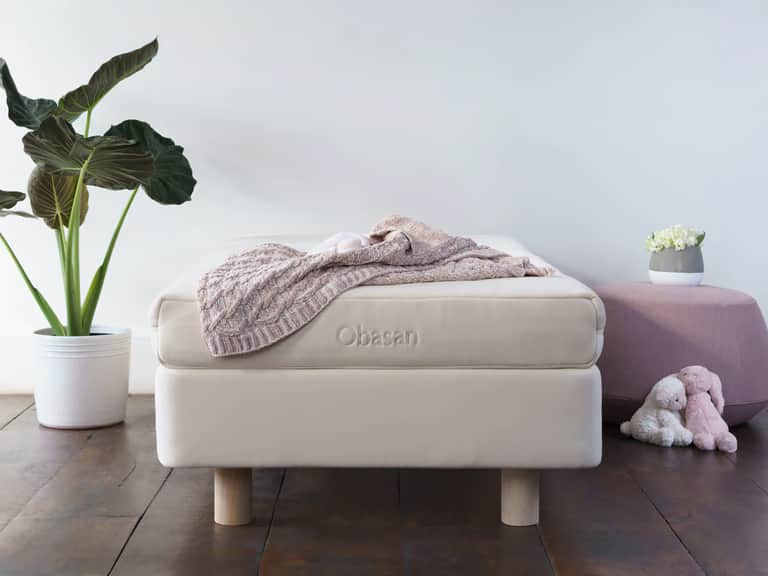
A different approach is to make firmness adjustable by turning or rearranging a component. The Obasan Organic Dunlop Latex Mattress for Children has two three-inch latex cores, one medium and one firm, and can be flipped to choose between the two sides. This illustrates how the same mattress can offer different firmness experiences without relying on a topper. Its specifications and recommended use are particular to that children’s mattress; it should not be treated as a universal adult fit guide.
These examples show why construction details matter. Ask which layer is on top, how thick each layer is, whether the layers are fixed or reversible, and whether the mattress has a cover or quilting that changes the feel. A product description that names only one firmness level may not tell the whole story.
Pressure relief and support belong together
Pressure relief is often discussed as though it were a separate feature from support. In practice, the two are closely connected. A surface that is too firm for a sleeper may concentrate pressure at the shoulder, hip, or another contact point. A surface that is too soft may feel comfortable initially but allow the body to settle in a way that feels unsupported. Comfort depends on the relationship between the two.
Think of the mattress as a landscape with shallow valleys and resilient ground beneath. The upper layers should yield enough for the body to rest without sharp pressure, while deeper layers should provide a stable base. Latex’s quick response can help a mattress adapt as weight shifts, but the material alone cannot guarantee that a particular construction will suit every sleeper.
Pay attention to more than the first few seconds of contact. Notice whether you feel pressure building at the shoulder or hip, whether the middle of your body seems to sink, and whether changing positions is easy. If discomfort is persistent or associated with a medical concern, seek advice from an appropriate health professional rather than assuming mattress firmness is the only cause.
Can a latex topper change the feel?
A topper adds another layer between the sleeper and the mattress. Depending on its material, thickness, and firmness, it can soften the first impression of a surface or make it feel more resilient. A latex topper may bring some of the material’s buoyant response to an existing mattress, but it does not completely change the structure underneath.
If the mattress feels slightly too firm and remains supportive, a suitable topper may create more cushioning at the surface. If the underlying mattress is sagging, uneven, or too yielding, adding a soft topper may not solve the deeper problem. It can even make the surface feel less stable. A topper is best understood as a way to adjust comfort—not as a guaranteed repair for a worn or poorly matched support core.
Before choosing one, identify what you want to change. Is the surface too hard at the shoulders? Does it feel warm or overly cushioned? Are you trying to make a guest bed more adaptable? The answer helps narrow the type of topper and its thickness. Also check that the topper is compatible with the mattress size and that it will not interfere with fitted sheets or an adjustable base.
Keep in mind that a topper can affect the feel of the entire sleep surface, not only the area where discomfort occurs. It may soften pressure points but also increase the amount of sink across the body. If a retailer offers a trial period, review its terms carefully. Policies can specify return windows, condition requirements, or other limits, and these details may influence whether an experiment is practical.
A practical way to compare firmness
Comparing latex mattresses becomes easier when you treat the decision as a process of observation. A label can start the conversation, but your own comfort and the construction details should guide it. Keep notes on what you feel rather than relying on a brief impression that may be difficult to remember later.
- Start with your usual positions. Test the mattress on your side, back, or stomach as you would at home. If you change positions during sleep, assess more than one.
- Notice pressure and stability separately. Ask whether prominent contact points feel cushioned and whether the rest of your body feels supported.
- Compare construction, not just labels. Record the number of layers, their thickness, and their stated firmness. Check whether the surface includes wool, quilting, or another cushioning component.
- Consider your body and sleep partner. Different weights and shapes can change how the same mattress feels. In a shared bed, assess both sides independently.
- Allow for a proper trial. An in-store test gives an initial impression, but sleeping at home over time may reveal patterns that are not obvious at first.
- Read the care and return information. A mattress’s maintenance requirements, trial terms, and warranty conditions are part of the practical decision.
These observations are more useful than trying to identify a perfect firmness number. The aim is a surface that feels comfortable in your regular positions and provides the kind of response you prefer, with no assumption that one firmness category will suit every body.
Materials and certifications are a separate question
For shoppers researching organic latex, material sourcing and certification may be important alongside comfort. These details answer different questions from firmness. A certification can help verify particular claims about materials or processing, depending on the standard and its scope; it does not establish that a mattress will be comfortable or supportive for a specific sleeper.
Similarly, a mattress made with organic materials can still feel too firm or too soft for an individual. Evaluate the construction, comfort, and material documentation as related but distinct parts of the decision. Look for clear information about which components are certified, which parts are covered by the claim, and how the layers are arranged.
Care also affects the experience over time. Follow the manufacturer’s instructions for rotating or flipping a mattress, cleaning its cover, and protecting it from moisture. A suitable mattress protector can help guard against spills and everyday wear, but check that its construction does not noticeably alter the surface feel you chose.
The best firmness is the one that fits your sleep
Latex offers a particular combination of responsiveness and resilience, but firmness is not a property that can be understood from a label alone. It emerges from the material’s construction and the sleeper’s interaction with it: body weight, shape, sleeping position, and personal preference all change the sensation.
Side sleepers may focus on cushioning at the shoulder and hip; back sleepers may look for a balance between surface comfort and even support; stomach sleepers may pay close attention to how much the midsection sinks. Combination sleepers may value a responsive surface that makes movement feel natural. These are useful starting points, not rigid categories.
When comparing a mattress or considering a topper, look for the relationship between pressure relief and support. Inspect the layers, ask how each contributes to the feel, and test the surface in the positions you use most. The right choice is not necessarily the softest, the firmest, or the one with the most persuasive label. It is the construction that lets your body rest comfortably, night after night.